The Taxonomy
of Originality
The Evolution
of Provenance
In the rarefied arena of investment-grade horology, provenance has emerged as the decisive determinant of liquidity and terminal valuation. An unmolested, factory-original timepiece commands a structural premium that transcends mere material sum. Authenticity is no longer a romantic ideal but a hard economic moat, one that establishes durable price floors even amid broader market volatility. Yet this stringent contemporary definition of originality is a relatively recent cultural artifact. Understanding its evolution—from the transparent pragmatism of the “marriage” watch to the opaque asymmetries of the “Frankenwatch”—is essential for any serious collector navigating the secondary market today.
The Era of Affectionate Pragmatism: The “Marriage” Watch
For much of the 20th century, the horological trade operated under a logic of resourceful continuity rather than purist dogma. Between the 1910s and 1930s, as wristwatches supplanted pocket watches in popular taste, skilled artisans routinely transferred superlative calibres from venerable houses—Patek Philippe, Vacheron Constantin, Longines—into newly fabricated cases suited to the emerging format. This practice intensified in the post-Depression decades and reached its zenith during the “Great Bullion Strip” of the 1970s and 1980s. Surging gold prices triggered widespread melting of precious-metal cases, orphaning thousands of elite mechanical movements. These survivors were compassionately rehoused in stainless-steel wristwatch cases, creating what the trade affectionately termed “marriage” watches.
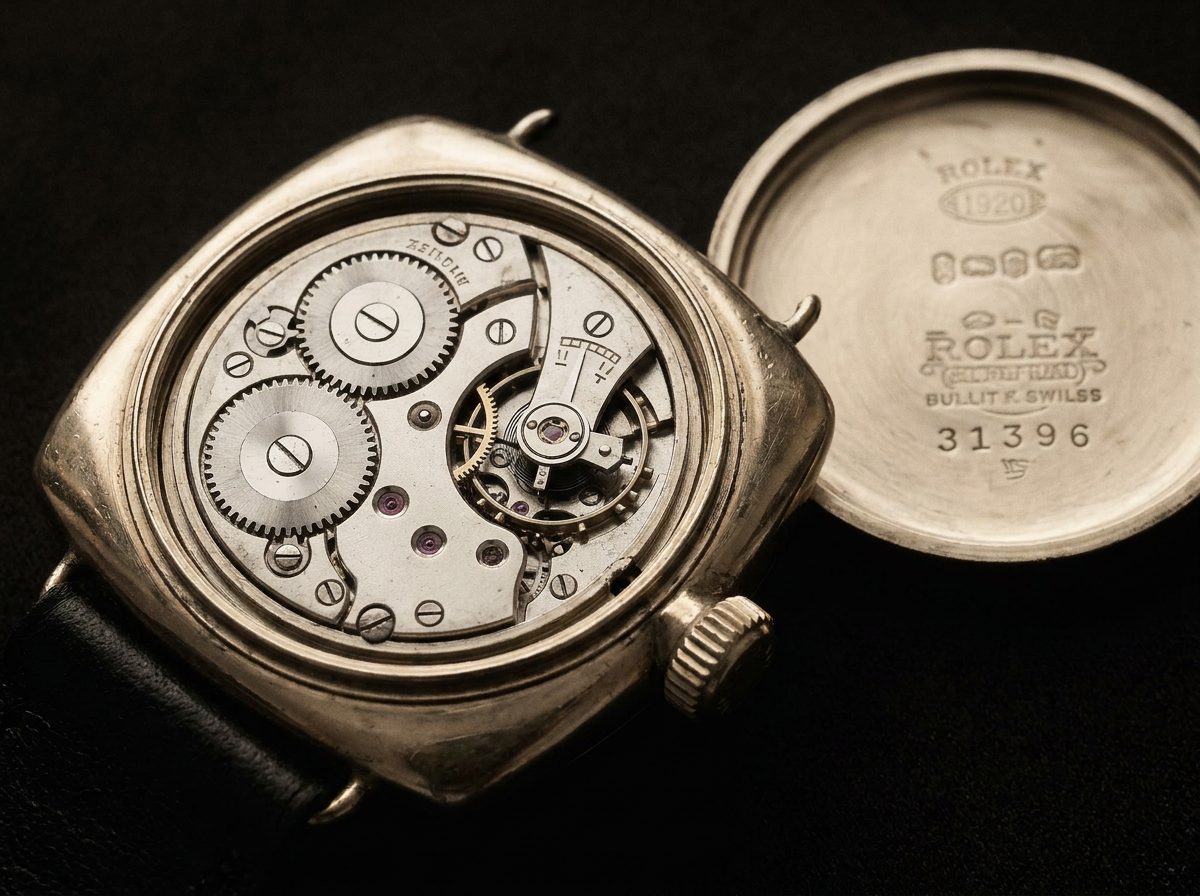
The nomenclature itself reveals a telling sociological baseline. A “marriage” implied harmonious union rather than deception. Components bearing genuine manufacturer signatures were united in transparent adaptation, granting an heirloom calibre continued relevance in a changing world. Tom Bolt, reflecting on his entry into the market some 35 years ago, recalls purchasing a 1930s gold Rolex at the Brunel Watch Fair for £400. A senior dealer openly identified it as a marriage—components adapted post-manufacture yet all bearing authentic marks. At that time, the market’s valuation heuristic remained pragmatic: legitimacy derived from material authenticity, not immutable factory chronology. Such composites traded without stigma, reflecting a cultural acceptance of stewardship over sterile preservation.
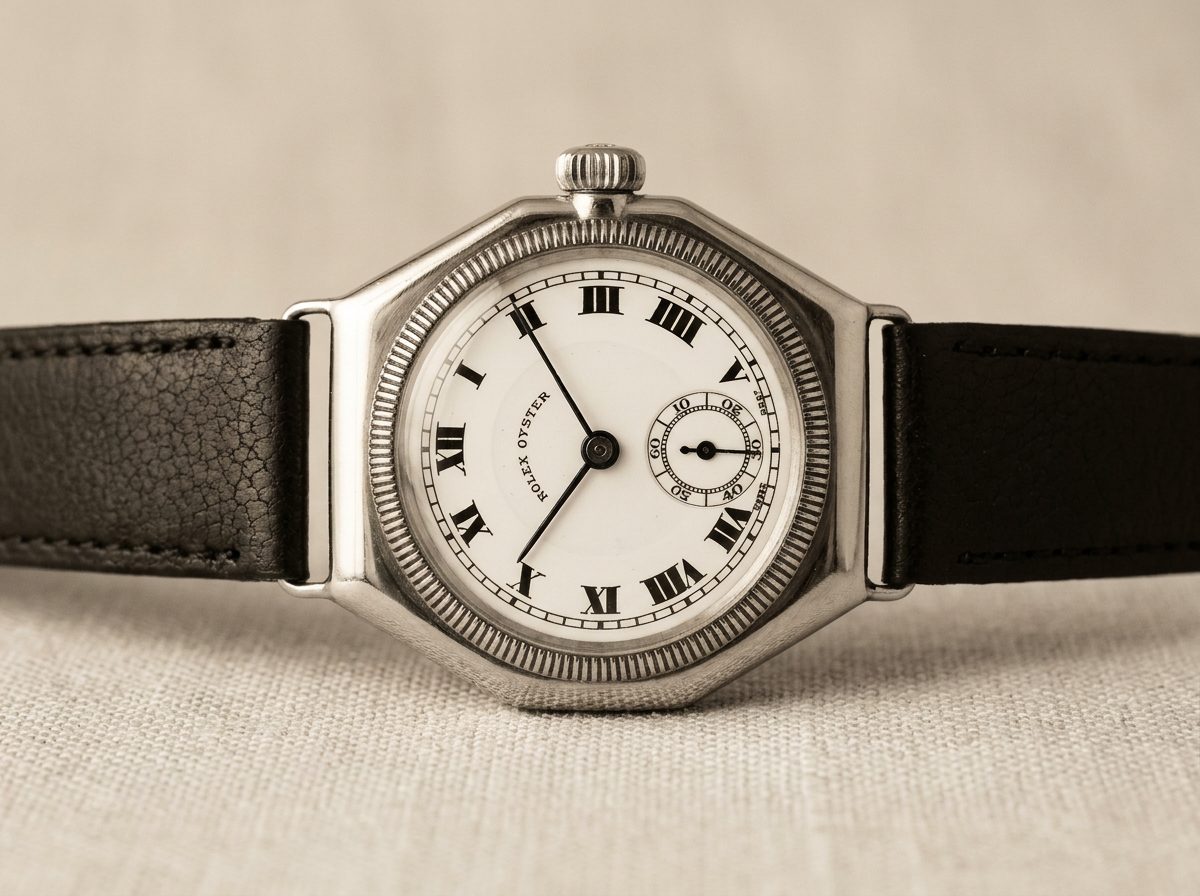
This era’s tolerance for adaptation mirrored broader societal attitudes toward tangible heritage. In an age before hyper-financialization, watches were instruments first, assets second. Marriages preserved mechanical excellence that might otherwise have been lost, sustaining supply in a market still maturing.
The Paradigm Shift: Financialization and the “Frankenstein”
The repositioning of mechanical watches as quintessential Veblen goods—where desirability intensifies with price and engineered scarcity—fundamentally altered this equilibrium. In the 1980s auction houses played the decisive catalytic role. They did not merely facilitate transactions; they conferred legitimacy. High-profile sales turned private passions into public spectacles, drawing in a new cohort of collectors. A Patek Philippe or Rolex reference, once appreciated in quiet salons, suddenly commanded global bidding wars. As auction houses, specialist retailers, and private banks professionalized the vintage sector over the past two decades, untouched factory originality became the paramount pricing variable. Exponential premiums attached to “full original configuration” references transformed collector psychology. What was once an act of affectionate pragmatism acquired a darker lexicon: the “Frankenstein” or “Frankenwatch.”
A Frankenwatch comprises genuine, period-correct components—dials, cases, hands, base movements—never originally paired by the manufacturer. Unlike the marriage watch, its assembly is driven by intent to arbitrage information asymmetry. By recombining elements to mimic high-value references, these composites artificially elevate secondary-market valuations while eroding trust. The cultural rebranding from pragmatic union to fraudulent hybrid underscores a deeper market truth: as prices escalated, so did the incentive to optimize inventory at the expense of transparency. What began as dealer pragmatism evolved into sophisticated deception when the financial stakes rendered every imperfection costly.
Central to the proliferation of Frankenwatches is the historical practice of “up-trimming.” Dealers facing inventory with mismatched strengths— one Submariner with an immaculate but polished case, another with a pristine dial but worn case—would swap components. The result: one superlative, top-tier example commanding premium pricing and one residual piece of diminished value. Decades ago, this cannibalization was accepted trade craft. Today, it constitutes horological fraud in the eyes of discerning collectors who price chronological integrity above all.
Nuance remains critical. Factory service dials, issued by the original manufacture for that specific reference, retain authenticity even if replaced during maintenance. As Bolt emphasizes, these do not qualify as Frankensteins; they represent authorized continuity rather than opportunistic recombination. The boundary lies in intent and verifiability. Pure marriages of convenience have given way to calculated fabrications that exploit the market’s reverence for originality.
The practice of swapping horological components began as a utilitarian necessity and an accepted method of historical preservation before the extreme financialization of the vintage market transformed it into a vehicle for fraud. During the early days of collecting, assessing a composite watch was remarkably straightforward; as our resident expert Tom Bolt recalls regarding his own early purchases, “As far as I was concerned, the movement says Rolex, the face says Rolex, and the case says Rolex, so it was so simple, the business of vintage wristwatches”. Bolt first encountered this practice when a dealer explained how parts were salvaged, stating, “It’s when they take a couple of watches and adapt them to each other”. However, the scale and sophistication of these operations intensified dramatically with the advent of curated thematic auctions in the late 1980s. These sales permanently recalibrated the market, generating unprecedented financial incentives for counterfeiters by creating instant “grail” categories and exponential price floors for specific, rare configurations. Bolt strictly delineates when this practice crosses into criminality, stating, “When you purposefully and knowingly alter the registration of a watch’s number, that is a fake watch”.
The ultimate case study illustrating this transition from innocent component swapping to devastating market manipulation is the counterfeiting of Officine Panerai by Luciano Rinaldi. Rinaldi specifically targeted Panerai because, for decades, it operated as a highly secretive military contractor with almost no discernible history available to the civilian public. The complete absence of rigorous, centralized corporate archives regarding the brand’s World War II-era military production meant that independent experts and auction houses had no reliable baseline data against which to verify anomalies. To further obscure the truth and cement his advantage, Rinaldi actively perpetuated the unsubstantiated myth that the majority of Panerai’s historical archives had been destroyed in the devastating Florence flood of 1966. By establishing the false premise that official factory records no longer existed, Rinaldi granted himself a blank historical canvas, allowing him to freely invent prototypes and assemble Frankenstein watches from disparate vintage parts without fear of archival contradiction.
The mechanical foundation of Rinaldi’s fraud relied on the discovery of genuine, discarded factory components. He managed to source dozens of authentic, anonymous “Kampfschwimmer” (combat swimmer) sandwich dials that had been abandoned at the old premises of the Arturo Junghans watch factory in Venice. By acquiring these genuine, period-correct base plates, Rinaldi effectively bypassed standard material-science forensic checks, such as radioluminescence testing and metal alloy analysis. He then meticulously altered these authentic dials by adding all kinds of fabricated engravings, and mated them with mismatched historical movements—specifically utilizing the Rolex caliber 618, the Angelus caliber 240, and the Montilier caliber 663—inside fabricated cases. This methodology successfully created entirely fictitious “Pre-Vendôme” references that completely flooded the secondary market.
The economic fallout from Rinaldi’s industrialized part-swapping proved that market contamination can permanently destroy legacy brand equity. When independent researchers exposed the sheer scale of Rinaldi’s operations and the auction houses’ systemic inability to screen out his fakes, the collector market experienced a sudden, catastrophic loss of confidence. In 2012, prior to widespread awareness of the fraud, an authentic vintage Panerai Reference 6154 sold at a Christie’s auction for a robust USD 326,500.
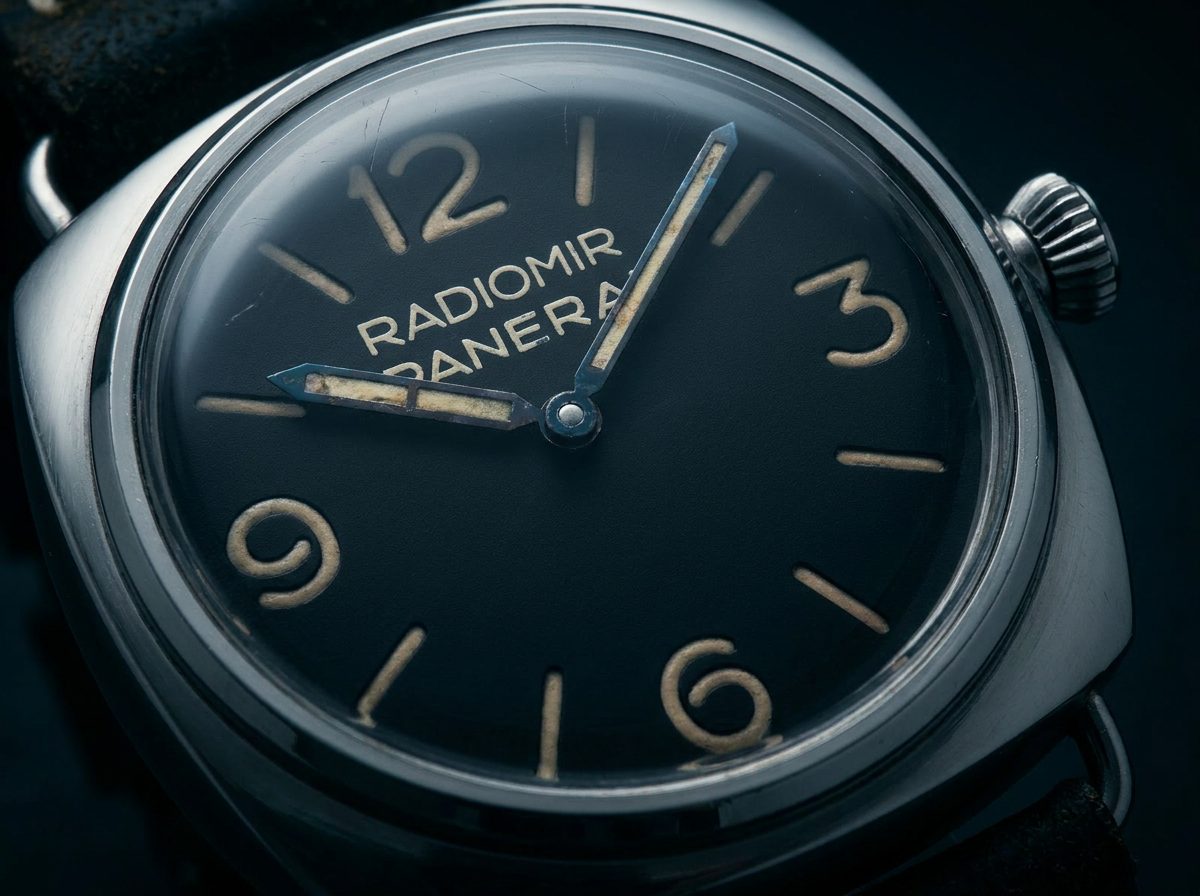
Just one year later in 2013, as the market absorbed the reality of the contamination, another Panerai Reference 6154 offered at Sotheby’s fetched a mere USD 75,000. This represented a devastating 77% collapse in core asset value for the exact same reference model within a single year, driven entirely by a sudden, systemic loss of market confidence rather than any broader macroeconomic factors.
The Forensic Reckoning: Navigating the Modern Minefield
Digital forensics has rendered casual part-swapping perilous for modern capital. Pioneers such as Jose Pereztroika (Perezcope) have constructed vast photographic databases and serial-range analyses that expose period-incongruent assemblies with forensic precision. Subtle variations in dial typography, font weight, and supplier idiosyncrasies—once invisible to all but the most seasoned eyes—now betray mismatches across tight production windows. A 1965 dial mated to a 1968 case, innocuous in an earlier era, triggers immediate red flags today. The vintage market has become, in Bolt’s words, “a huge minefield.”
This forensic awakening functions as a powerful market corrective. It reinforces price floors for verifiably original pieces while imposing steep discounts—or outright illiquidity—on composites. Behavioral economics explains the dynamic: heightened awareness of deception amplifies demand for verifiable provenance, converting cultural suspicion into tangible valuation premia. Collectors now price not merely the sum of genuine parts but the immutable narrative of their assembly.
Strategic Implications for Alternative Tangible Asset (ATA) Allocators
The evolution from marriage to Frankenstein reveals a profound truth about luxury ATAs: authenticity is ultimately cultural, and culture itself is priced. As sociological baselines shift—from pragmatic preservation to purist absolutism—so do the economic moats protecting capital. For strategists, this demands rigorous due diligence beyond basic brand verification. Chronological forensics, expert networks, and transparent provenance chains are no longer optional; they are non-negotiable disciplines for safeguarding returns.
In an era of monetary debasement and digital abstraction exceptional vintage watches derive enduring value from their resistance to replication. Yet that value is conditional upon trust in origin. The modern investor who masters the distinction between affectionate adaptation and engineered illusion positions capital at the securest price floors the market can offer—floors anchored not in sentiment alone, but in the hard logic of verifiable history.
The Five Tiers
of Modification
In the stratified world of investment-grade horology, authenticity is rarely binary. The investor who treats a timepiece as either wholly genuine or irredeemably counterfeit overlooks the nuanced taxonomy that governs secondary-market pricing. Modification exists on a sliding scale—from sympathetic historical adaptation to engineered deception—each tier calibrated to distinct sociological eras and economic incentives. This spectrum does not merely describe technical interventions; it reveals how shifting cultural baselines around originality create predictable valuation floors and liquidity asymmetries. Mastering these tiers is prerequisite to pricing risk, preserving capital, and capturing durable premia in an increasingly forensic marketplace.
Tier 1: The Marriage Watch (Historical Adaptation)
At the benign origin of the scale sits the marriage watch, born of pragmatic stewardship rather than subterfuge. Prominent from the 1930s and peaking amid the “Great Bullion Strip” of the 1970s and 1980s, this practice saw owners liquidate heavy gold pocket cases for bullion value, leaving elite calibres from Patek Philippe, Vacheron Constantin, and others orphaned. Artisans then rehoused these movements in contemporary stainless-steel wrist cases, extending the mechanical life of exceptional artefacts.
Dealers disclosed married status without hesitation: Tom Bolt reflects: “The movement says Rolex, the face says Rolex, and the case says Rolex—so it was simple.” In that pre-financialization epoch, the market applied affectionate leniency. These composites were viewed as legitimate acts of conservation, preserving horological excellence amid material scarcity. Today, while they trade at a measured discount to factory-original equivalents, they retain collector respect as cultural artefacts of adaptive resilience, anchoring a modest yet stable price floor.
Tier 2: The Service Face (The Purist’s Threshold)
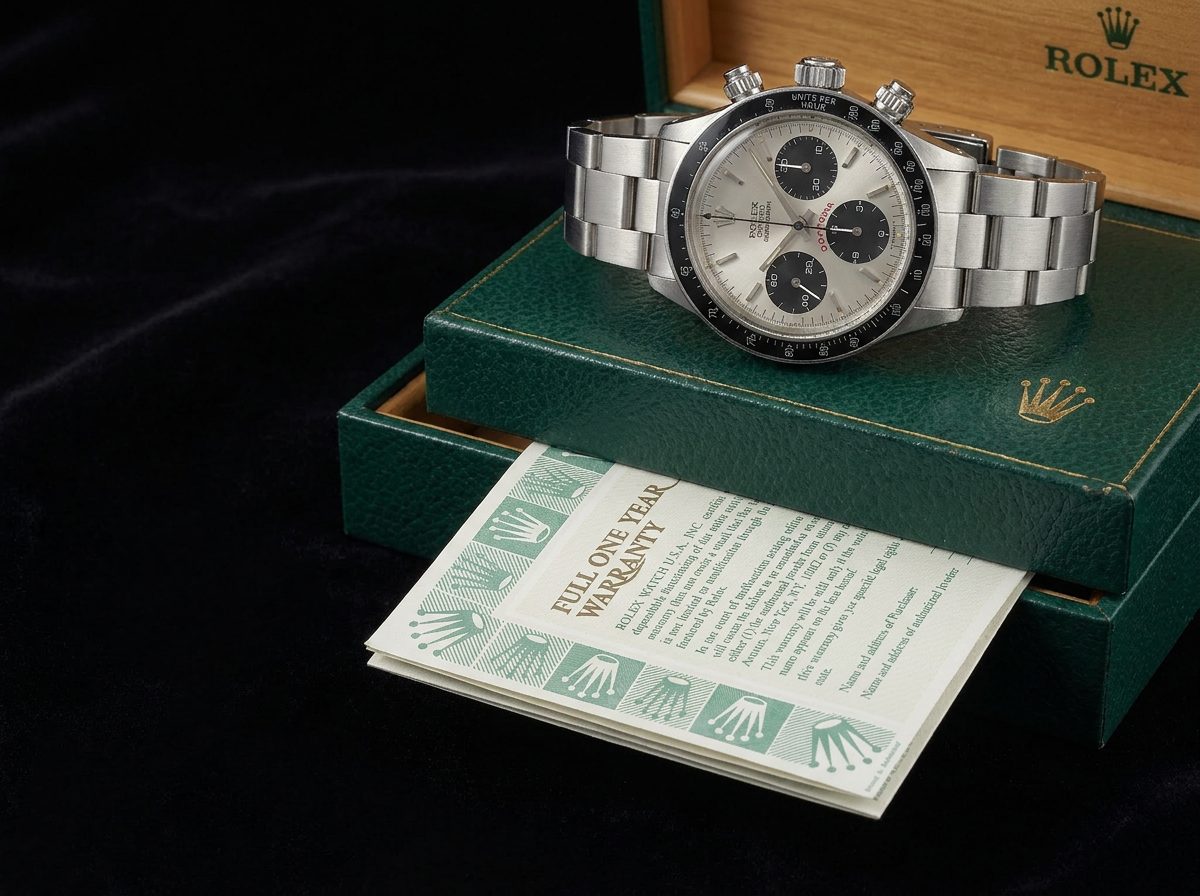
One step along the continuum lies the service dial—utilitarian necessity elevated to provenance liability. During the 1960s and 1970s, when wristwatches served as daily instruments rather than vaulted assets, Authorized Service Centres routinely replaced radium- or tritium-degraded dials with fresh, functional replacements to ensure safety and legibility. The intervention was never concealed; it represented responsible maintenance.
Contemporary purism has inverted this logic. Collectors now prize “born-with” organic patina above functional continuity, imposing a severe “toxic provenance” discount—often 50 to 80 percent—on service-dialled examples. Bolt resists the Frankenstein label here, observing that “it’s still a Rolex face that was meant for that model. It’s just a later version.” This tier illustrates a profound cultural shift: from valuing mechanical utility to fetishising chronological virginity. The resulting valuation penalty underscores how sociological redefinition of authenticity can erode asset liquidity even when every component remains manufacturer-approved.
Tier 3: Dealer-Level “Up-Trimming” (Component Cannibalization)
Mid-spectrum resides dealer up-trimming, a practice refined in the 1980s and 1990s as aesthetic perfection became monetisable. Confronted with inventory of uneven condition, specialists would harvest pristine elements—rare “Exotic” dials, unpolished cases—from lesser specimens and transplant them into superior hosts. The outcome: one exceptional, auction-ready piece and one residual compromise.
Bolt describes the arithmetic with clinical clarity: “If you had two watches… one with a lovely case but the face past its sell-by date, and the other with a lovely face but a polished case, you could end up with one really beautiful watch and one that was kind of okay.” In an earlier market that rewarded period-correct appearance over forensic chronology, such swaps could transform a $30,000 asset into a $400,000 auction result.
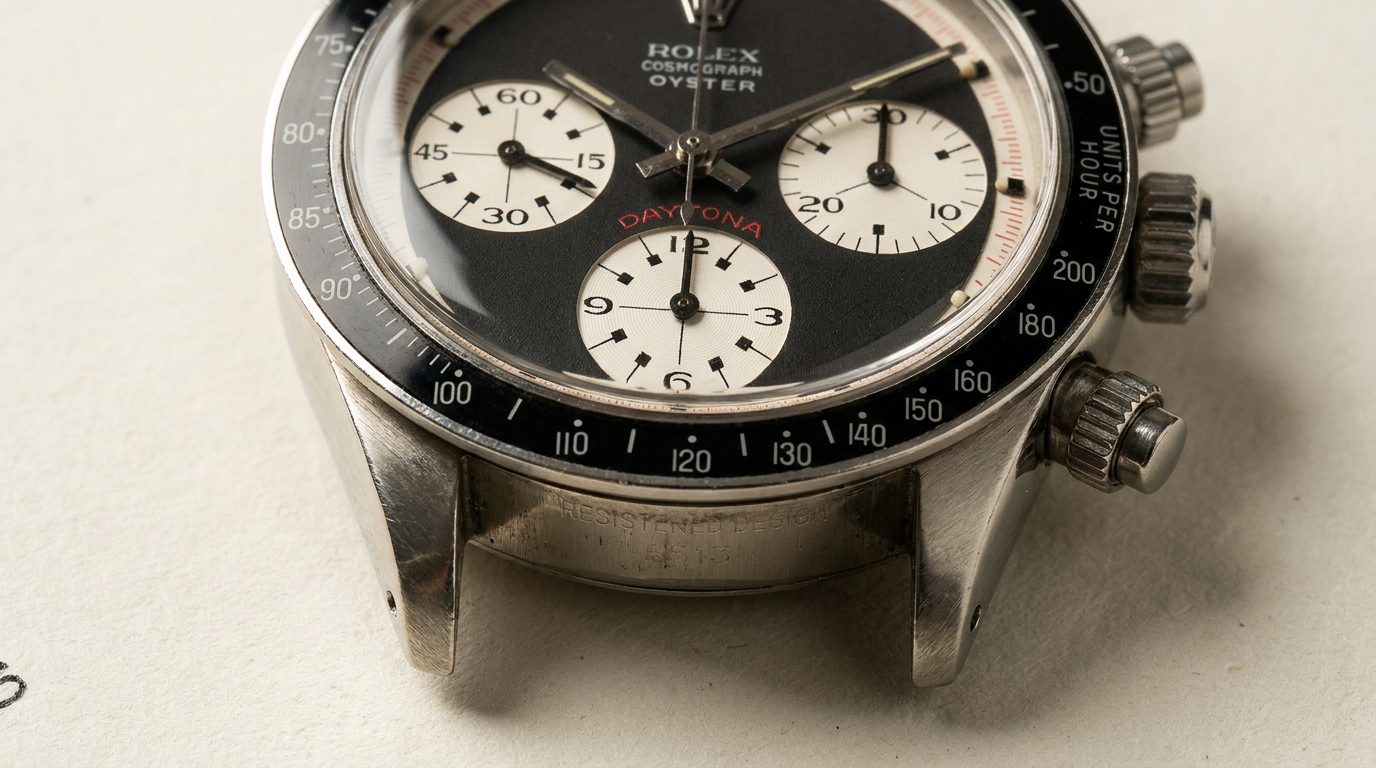
Today, while still prevalent in legacy collections, up-trimming occupies contested ground—tolerated by some as historical trade craft, penalised by purists as early-stage manipulation. Its legacy demonstrates how dealer optimisation once smoothed supply but now introduces friction as transparency demands intensify.
Tier 4: The Period-Incorrect Assembly (The Forensic Frankenstein)
Further along the scale, period-incongruent assemblies mark the transition into overt risk. These Frankenwatches combine genuine but never factory-paired components: mismatched serial ranges, divergent dial typography, crossed production windows—often disguised through artificial aging or laser-etched serials. The advent of independent digital forensics has rendered this tier treacherous.
Researchers such as Jose Pereztroika (Perezcope) have weaponised vast photographic archives and supplier-specific data to expose anomalies invisible to prior generations. Bolt’s assessment is sobering: vintage collecting “has become a huge minefield.” A visually compelling “grail” offered at $500,000 can collapse to the sum of parts—$30,000 to $50,000—once deconstructed. Institutional buyers now price in an explicit “authentication tax,” budgeting for XRF analysis, micro-CT scanning, and expert networks. This tier reveals behavioural economics at work: heightened awareness of deception amplifies demand for verifiable originality, widening the valuation chasm between the pristine and the compromised.
Tier 5: The Superfranken (The Apex Counterfeit)
At the apex of deception sits the Superfranken, an industrialised hybrid engineered to defeat conventional authentication. Underground networks pair high-fidelity Chinese “Super Clone” chassis—complete with geometrically cloned movements such as the Dandong 4130 and 904L steel cases—with authentic OEM elements: genuine dials, gold hands, bezels, and crowns. The construction exploits cognitive anchoring: an authenticator’s eye, haloed by flawless visible components, subconsciously extends trust to the concealed mechanics.
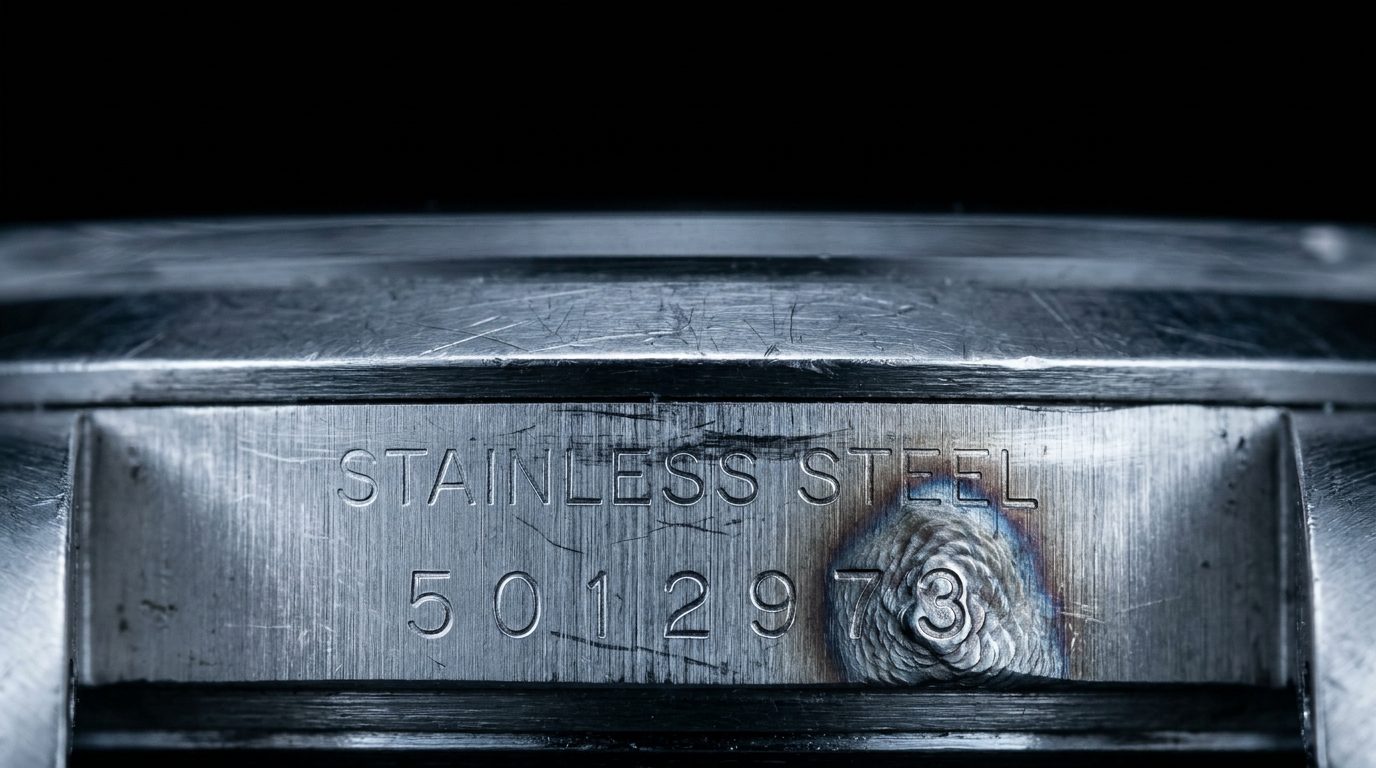
This psychological exploit poses systemic risk to secondary-market confidence. Superfrankenwatches do not merely imitate; they are optimised to survive superficial inspection, threatening the foundational trust upon which ATA liquidity rests. Their proliferation demands institutional-grade protocols—far beyond visual or basic documentary review—reinforcing the premium commanded by watches with unbroken, forensic provenance chains.
Strategic Imperative for Investors
The five-tier spectrum is not technical trivia but a cultural-economic map. Each level reflects evolving societal attitudes toward heritage: from resourceful adaptation in eras of scarcity to hyper-purism in eras of abundance and speculation. As these baselines shift, so do price floors. Marriages may retain sympathetic value; Superfranken threaten outright illiquidity. For the discerning allocator, this framework converts cultural insight into risk-adjusted decision-making.
Protecting capital in vintage horology now requires moving beyond brand mythology to forensic rigour. Those who internalise the sliding scale—pricing each intervention’s sociological and market-derived discount—position themselves at the most resilient valuation nodes. In a world of monetary dilution, the watches that endure are those whose stories remain verifiable, their originality not merely claimed but culturally and forensically impregnable.